
How Seasonal Changes Affect Your Dog’s Appetite
Cooler days, bigger appetite?
Has your dog suddenly become a little more interested in what's happening around their food bowl?
As autumn arrives, temperatures fall, routines change and activity levels can shift. And for some dogs, these seasonal changes may influence their appetite and energy requirements.
But a dog who seems hungrier doesn't necessarily need a bigger portion.
Every dog is different, so rather than feeding according to the season, it’s important to look at the whole picture — from their activity levels and body condition to their individual lifestyle.
Here's what to look out for.
Why might your dog's appetite change in autumn?
There's no single rule for how a dog's appetite will respond to a change in season.
Their age, breed, size, body condition, activity levels and environment can all influence their individual energy requirements.
However, there are a few seasonal changes worth paying attention to.
-
1. Cooler temperatures
As temperatures fall, dogs that spend significant amounts of time outdoors may use more energy keeping warm. For many family dogs living predominantly indoors, however, the change may be relatively small. That's why cooler weather alone isn't a reason to automatically increase your dog's food.
-
2. Changes in activity
Autumn can change how much exercise your dog gets. For some, cooler temperatures mean longer walks, more adventures and plenty of time exploring outside. For others, darker mornings, shorter evenings and wet weather can mean less activity. If the amount of energy your dog uses changes, their nutritional requirements may change too.
-
3. A different daily routine
The change of season often changes our routines as well. Walks may happen at different times, your dog may spend more time indoors and family schedules can change. These differences can influence feeding behaviour — and sometimes a dog asking for food isn't necessarily a dog that needs more food.
Is your dog actually hungrier?
Those eyes can be very persuasive.
Before increasing their portion, consider what's happening beyond the bowl.
Their appetite
Is your dog genuinely eating differently, or have they simply become more enthusiastic about asking for food?
Their activity
Have their walks become longer or shorter? Are they spending more time running and playing — or more time snoozing indoors?
Their body condition
Regularly checking your dog's weight and body condition can help you understand whether their current feeding amount is appropriate.
The bigger picture
One hungry afternoon isn't necessarily significant. What matters more is a consistent change in their normal behaviour.
Know what's normal for your dog and pay attention when that changes.
If your dog's appetite suddenly increases or decreases, particularly alongside unexpected weight changes or other unusual symptoms, speak to your vet.
Should you feed your dog more in autumn?
Not necessarily.
It's easy to assume colder weather means your dog needs a fuller bowl, but feeding requirements should be based on the individual dog rather than the season alone.
Instead, consider:
- their current body condition
- how active they are
- whether their weight is changing
- their age and life stage
- their individual lifestyle
If nothing else has changed, there's usually no reason to increase portions simply because autumn has arrived.
If their lifestyle has changed significantly, their feeding routine may need to change with it.
Small seasonal changes can make a difference
You don't necessarily need to completely rethink your dog's diet when autumn arrives.
A few simple habits can help you stay in tune with their changing needs.
Keep portions consistent.
Avoid automatically adding more food simply because your dog appears hungrier.
Watch their body condition.
How your dog looks and feels can tell you more than the season on the calendar.
Consider their activity.
A particularly active day may look very different from a rainy day spent mostly indoors.
Don't forget the extras.
Treats, chews and rewards all contribute to your dog's overall daily intake.
Keep an eye on changes.
You know your dog's normal habits better than anyone. Significant or persistent changes are worth investigating.
What about treats?
Treats have their place in a balanced routine too — particularly when autumn brings plenty of walks, adventures and training opportunities.
The important thing is remembering that treats contribute to your dog's overall daily intake.
If you're having a particularly treat-heavy day — perhaps you're working on recall during an autumn walk — take those extras into consideration rather than treating them as nutritionally invisible.
A little awareness can help keep the balance between rewarding your dog and maintaining an appropriate overall intake.
Every dog is different
One dog might spend autumn racing through fallen leaves.
Another might take one look at the rain and decide the sofa is a much better option.
That's why there isn't a universal autumn feeding rule.
Instead, follow your dog, not just the season.
Watch their appetite. Pay attention to their activity. Keep an eye on their weight and body condition. And adjust their feeding routine when their individual needs genuinely change.
Small observations throughout the year can help you make better feeding decisions — whatever the weather.
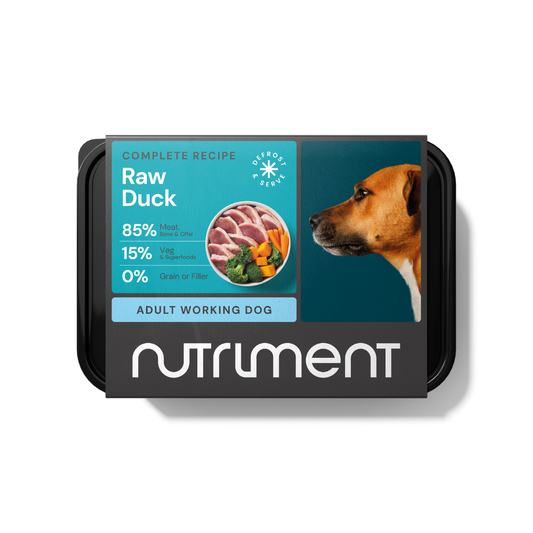
Explore Nutriment food
Frequently Asked Questions
Do dogs get hungrier in autumn?
Some dogs may appear hungrier as the seasons change, but this doesn't necessarily mean they need more food. Changes in activity, routine and environment can all influence appetite and feeding behaviour.
Should I feed my dog more when it's cold?
Not automatically. A dog's individual energy requirements depend on factors including activity, environment, age and body condition. Dogs spending considerable time outdoors in cold conditions may have different requirements from dogs living predominantly in heated homes.
Why is my dog suddenly eating more?
There are many possible reasons for a change in appetite. Consider whether your dog's exercise or routine has recently changed. If increased hunger is sudden, persistent or accompanied by changes in weight, behaviour or health, speak to your vet.
Do dogs eat more in winter?
Some dogs may have different energy requirements during colder months, particularly highly active dogs or those spending significant time outdoors. However, this doesn't mean every dog needs larger winter portions.
Should I change my dog's food for autumn?
There's generally no need to change a food that suits your dog simply because the season changes. Instead, monitor their activity, weight, appetite and body condition and adjust their feeding routine according to their individual needs.