

Why first meals matter: Raw nutrition and puppy and kitten gut health
What your new puppy or kitten eats in their first weeks and months of life has a profound, lasting effect on their gut microbiome, immune system, and long-term health.

The gut is where everything starts
A young pet's gut isn't just there to digest food. It's also the home of gut-associated lymphoid tissue which is essentially a training ground for the immune system. Around 70–80% of immune cells reside in or around the gut, and in early life, the bacteria your puppy or kitten encounters help determine those cells. They teach the immune system what's friend and what's foe.
Laying those foundations well means you're setting your puppy up for life with a well-regulated immune response.
Research Highlight
A study by the University of Helsinki followed thousands of Finnish dogs and found that puppies fed a non-processed, meat-based diet during the first six months of life were significantly less likely to develop chronic gut disease as adults. Those puppies fed an ultra-processed, carbohydrate-heavy diet faced a meaningfully elevated risk of conditions like inflammatory bowel disease. Raw bones and cartilage during puppyhood were highlighted as particularly protective. (Read More)

A critical window you can't get back
2-6 months
Microbiome development is the most critical during the early months of a puppy's life. During this time, the gut is especially receptive to the microbes and nutrients it encounters. A puppy raised on a diverse, minimally processed diet during this phase tends to develop a rich and diverse microbiome.
A study tracked dogs from two to fourteen months and confirmed just how rapidly the gut bacterial community changes in early puppyhood. The microbial landscape at two, three, and five months was dramatically different from what it looked like at eight months and beyond. Suggesting that dietary choices in those earliest months carry the most weight.
Kittens follow a similarly rapid and sensitive developmental timeline. One study tracked 30 kittens and found that structural and functional diversity of the gut microbiome increased significantly between 18 and 30 weeks.
Separate research confirmed that a kitten's diet at 8 weeks has a measurable effect on the species richness and diversity of the gut microbiome. Kittens fed a high-protein, low-carbohydrate diet showed greater microbial diversity.
This matters because kittens are obligate carnivores and their digestive biochemistry is designed around the nutrients found only in animal tissue. They cannot synthesise taurine or vitamin A from plant sources, and without adequate bioavailable protein, during early life stages kittens face the risk of developmental delays, weakened immune systems, and irreversible damage to vision and heart function.
Raw feeding and the puppy immune system
Research Highlight
A study extended these findings beyond gut health: the puppy's first solid diet and their diet from 2–6 months of age were both independently associated with a lower risk of chronic ear infections (otitis) in adult life when early meals were based on non-processed meat. The researchers concluded that early dietary programming shapes immune responses far beyond the digestive system itself. (Read More)

It starts even before the first mouthful
The microbiome story begins before puppies and kittens even enter the world. The mother's diet during pregnancy influences what bacteria and immune signals their offspring is exposed to in the womb and through her milk. A mother fed a nutrient-dense, raw diet during pregnancy and lactation is better positioned to pass protective microbial signals to her offspring. Studies have found that the maternal diet during pregnancy was associated with reduced risk of both gut disease and ear infections in offspring.
You can read more on feeding a raw diet throughout a bitch's pregnancy here.
Discover our puppy food
-
Regular price £4.50Regular price£30.00 kg Unit price per
-
Regular price £4.90Regular price£24.50 kg Unit price per
-
Regular price £4.99Regular price£12.48 kg Unit price per
-






What the gut actually needs from food
A healthy young microbiome is built on:
Bioavailable protein from quality animal sources, which supports growth, neurological development, immune function, and energy.
Natural fats for brain and nervous system development and fat-soluble vitamin absorption.
Raw bone for minerals, texture, and dental health. A study in dogs found that those fed a non-processed meat-based diet during weaning, puppyhood, and adolescence were significantly less likely to develop dental calculus later in life.
Organ meat dense in micronutrients including taurine (critical for cats), iron, zinc, and B vitamins.
Vegetables and superfoods providing fibre and phytonutrients that beneficial bacteria need to thrive.
Research Highlight
A study of 4,771 dogs found that those fed a non-processed meat-based diet during weaning, puppyhood, and adolescence were significantly less likely to develop dental calculus later in life. Dental disease in dogs is closely linked to inflammation, and the effect was consistent across all three early life stages. (Read More)

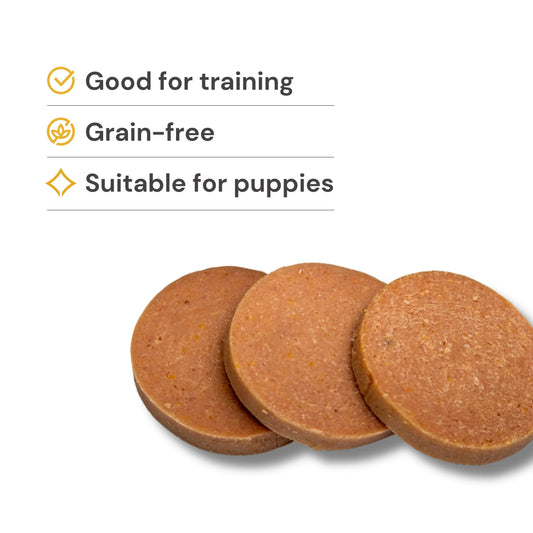
Our Puppy Formula is suitable from six weeks of age and has been made with high quality, meat, bone and offal which has been finely ground to be a suitable size for puppies. Our puppy recipe also contains a carefully chosen blend of vegetables and natural superfoods to nourish the microbiome, support digestion, and lay the groundwork for a strong immune system.
For those just starting out, our Puppy Nuggets Starter Pack makes transitioning simple: pre-portioned, easy to defrost, and formulated to the same complete nutritional standard.
Our puppy feeding guide walks you through exactly how much to feed at each stage, from the first tentative mouthfulls to full raw meals in adolescence and adulthood.

The long game
The science into raw feeding is still growing, but the direction is remarkably consistent for both species. Study after study from some of Europe's leading veterinary nutrition researchers points to the same conclusion: the meals puppies and kittens eat in their first few months of life are not just feeding today's growth but are actively influencing their future health.
A gut microbiome shaped by raw, varied, minimally processed food in early life is better prepared to regulate the immune system, resist infection, support healthy digestion, and guard against chronic disease.
