
Raw Food and Your Dog's Gut Health: What the Science Says

A golden retriever licks raw dog food as someone serves it beside stacked Nutriment food packs on a kitchen counter.

Raw Food and Your Dog's Gut Health: What the Science Says

Gut health is one of the most important — and most misunderstood — factors in your dog's overall health. It affects digestion, immunity, energy levels, brain function, and even behaviour. Get it right and almost everything else follows. Get it wrong and the effects show up everywhere: loose stools, low energy, skin issues, recurring illness.

Raw feeding is increasingly seen as the most natural way to support canine gut health. With no unnecessary processing, carbohydrate fillers, or synthetic additives, supporters of raw say it works with your dog’s digestion rather than against it.  Independent academic research backs this up – but we wanted to conduct our own research on the impact of raw on the gut. So we ran the largest raw feeding microbiome study ever conducted in Europe — 101 dogs, 35 days, one diet. The results are amazing  - here's what the science shows. 

What is the gut microbiome?

Inside your dog's digestive system lives an entire ecosystem — billions of bacteria, viruses, and fungi that are as unique to your dog as their nose print. 

These microorganisms aren't passengers. They have jobs: 

  • Breaking down food into nutrients your dog can actually absorb 
  • Producing key chemicals the body can't make on its own 
  • Making sure the immune system works properly 
  • Supporting normal behaviour 

The balance and diversity of this microbial population has been linked to health, disease, immunity, and even mood. A rich, balanced microbiome is one of the strongest foundations for long-term health a dog can have. 

The critical question for dog owners is simple: how can we protect, grow, and nurture our dogs’ microbiomes? And what impact does the food we feed them have? 

A person in a green sweater holds a treat above a standing dachshund reaching up on its hind legs.

What processed food does to the gut 

The gut microbiome feeds on what your dog eats. When the diet changes, the microbiome changes with it. 

Most dry kibble is made through extrusion — a high-temperature, high-pressure manufacturing process that extends shelf life but degrades nutrients in the process. In particular, extrusion damages Vitamins A, E, and C, as well as key amino acids.¹

But that’s not all: studies have found that dogs can only process between 66-84% of commercially processed diets, compared to a fantastic 96.55% of protein in raw diets. It makes sense – dogs process what they’ve always eaten, better than highly processed modern pet food.²³

It gets worse when you look at the high carbohydrate content in processed food. Dogs did not evolve to process carbohydrates – they have sharp canines for ripping into meat, instead of flat molars for grinding vegetative matter. The gut is similarly unprepared. But most dry foods contain around 40–50% carbohydrate by dry matter — primarily to hold the kibble together. The result? Loose stools, gas, and bloating. 

What raw food does to the gut 

Multiple independent studies have examined what happens when dogs switch from processed food to raw — and the findings point in the same, positive direction. 

A study by Sandri et al. examining healthy dogs on a raw meat-based diet found that switching to raw significantly increased the variety of ‘good’ bacteria found in the gut, directly improving stool quality.⁴

Meanwhile, a controlled US study (Algya et al., 2018) found that dogs eating raw food absorbed nutrients more effectively and developed a healthier gut than dogs being fed kibble.⁵

So, how quickly does switching to raw work? Well, Norwegian researchers showed that it takes hardly any time to respond. Switching from dry food to a meat-based diet produced measurable improvements to gut bacteria in just a few weeks.⁶

The pattern is consistent: the gut responds quickly, and it responds positively to real food.

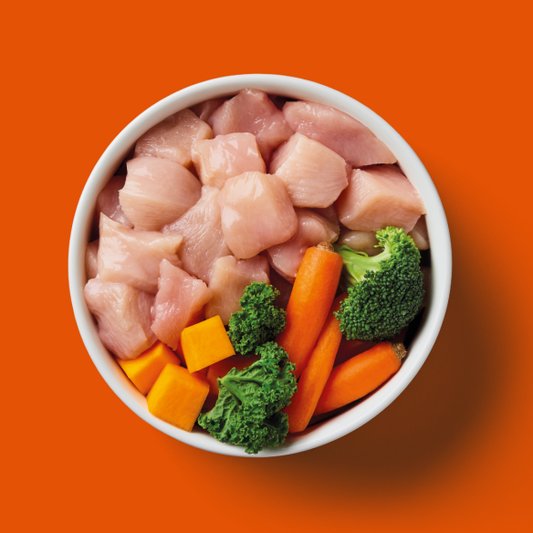
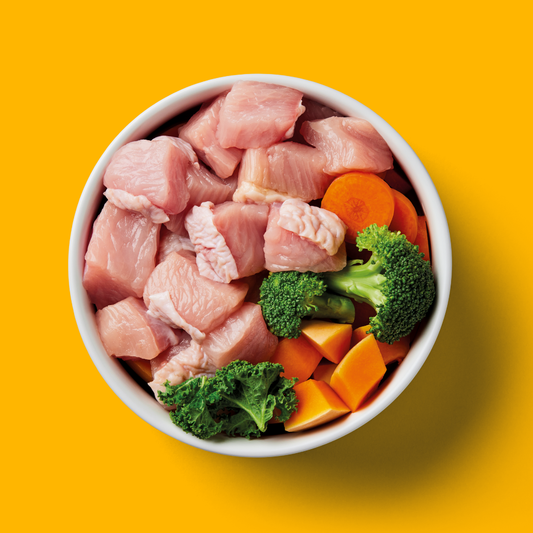
A bowl of raw chicken chunks with broccoli, kale, carrots, pumpkin, and blueberries on a blue background.

The long-term picture: early diet and lifelong gut health

Some of the most compelling evidence comes from the DogRisk research group at the University of Helsinki, whose long-term studies across tens of thousands of dogs have examined the link between early diet and chronic health outcomes. 

A study of 16,607 dogs found that feeding a non-processed, meat-based diet during puppyhood and adolescence  significantly reduced the risk of chronic enteropathy — long-term digestive disease — in adult life.⁷ 

And then, a related study of 7,015 dogs found that puppies fed a raw diet in the first six months of life had a significantly lower risk of developing inflammatory bowel disease as adults.⁸

The implication is huge, and clear. Providing your dog with a healthy microbiome is key a long, healthy life. Starting them on a raw diet is the most effective way to support their microbiome. And even if they didn’t start raw as a puppy, their gut can respond in less than  a month when you switch to raw. 

Nutriment's own study: 101 dogs, 35 days 

The independent research above is compelling. But we wanted to know what our own food does to dogs' gut microbiomes — so we ran the largest raw feeding microbiome study ever conducted in Europe. 

Working with Treat Therapeutics, we recruited 101 dogs across 42 breeds, all kibble-fed. We collected stool samples on day zero, transitioned them onto our raw food over five days, then fed them for 35 days before collecting a second sample. 

Researchers sequenced the DNA of the microbes in those samples — identifying species, measuring diversity, and analysing the impact the bacteria had on the dogs’ health. 

The initial results, which we're preparing for peer-reviewed publication, were significant across the board.

Collapsible content

Gut microbiome richness increased significantly 

There were more types of bacteria, in greater numbers — particularly those that process protein for growth and cell maintenance. With kibble, improving the microbiome richness is very difficult, and typically requires probiotic supplementation. Raw feeding achieved this without any additional support. The effect was seen across all age groups, but was most pronounced in senior dogs, whose microbiomes are typically the hardest to shift. 

Short-chain fatty acid production increased significantly 

SCFAs — including butyrate — are produced by gut bacteria and can't be effectively supplemented from outside. They maintain the gut lining, support brain function, and play a role in serotonin release. Dogs in our study had measurably more of the organisms responsible for producing them after just 35 days on raw food. 

Chondroitin breakdown improved 

The organisms responsible for processing chondroitin into usable form increased — meaning the dogs' guts were better equipped to absorb this joint-supporting compound from their diet. 

84% of participants completed the full 35 days

This is an unusually high adherence rate for a nutrition study, and a strong signal that dogs accept and genuinely enjoy the diet. You can read the full methodology and initial findings at trustyourgut.pet, with the detailed results here

A woman serves raw dog food into a bowl while a happy dog looks on eagerly in a kitchen.

What this means for your dog

The science is clear. Feed your dog food that works with their biology — real meat, minimal processing, no unnecessary carbohydrates — and the gut responds fast. 

Whether your dog is a puppy building their microbiome for the first time, or an older dog that's spent years on kibble, the evidence shows that switching to raw makes a measurable difference in weeks, not months.

Most food brands ask you to trust them. We'd rather show you the evidence. Nutriment is the only raw dog food brand to have commissioned a full microbiome study on its own recipes — run by independent researchers, across 101 real dogs. The results speak for themselves. You know exactly what our food does. If you’re thinking of supporting your dog’s microbiome, and switching to raw, explore what makes us different. 

A golden retriever sits behind stacks of colorful nutriment pet food boxes on a wooden floor.

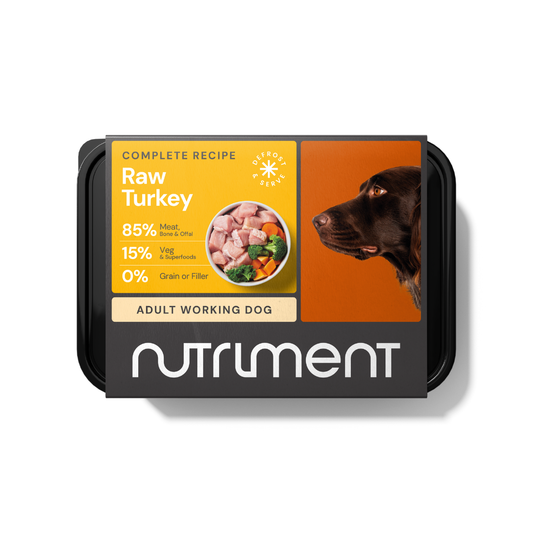
Explore our raw range 

If you're ready to make the switch, here's where to start. 

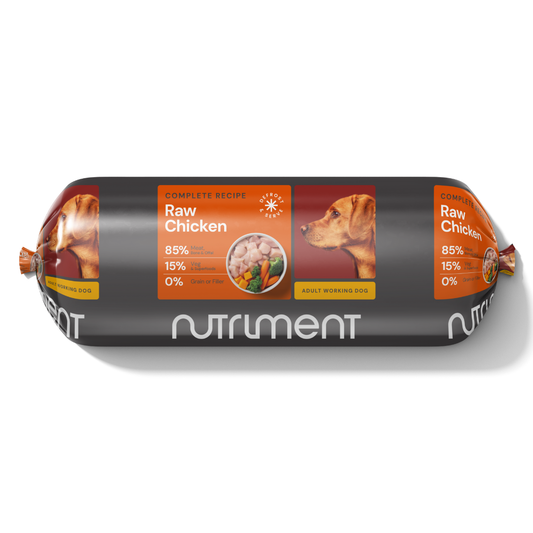
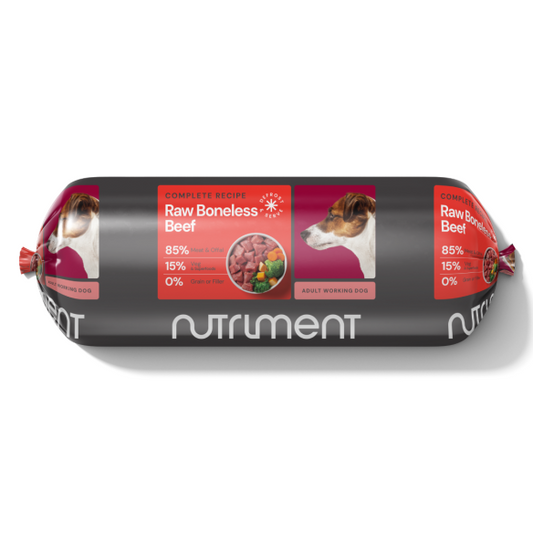
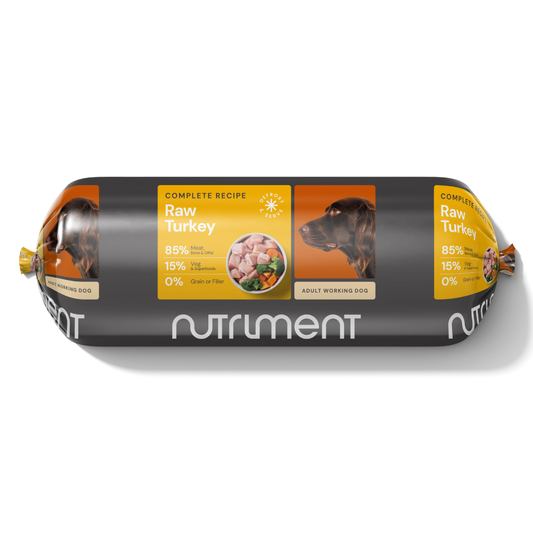
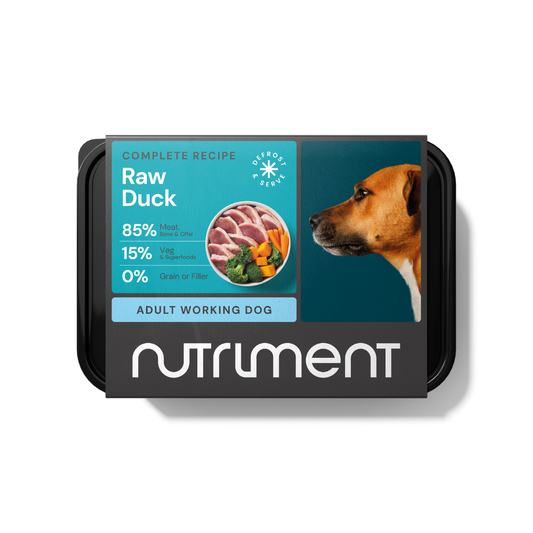
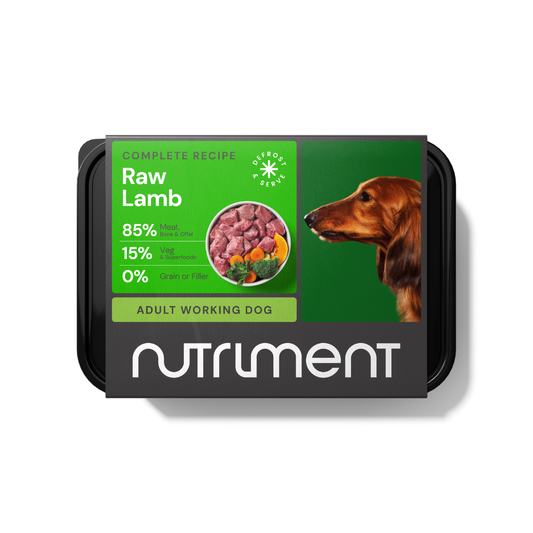
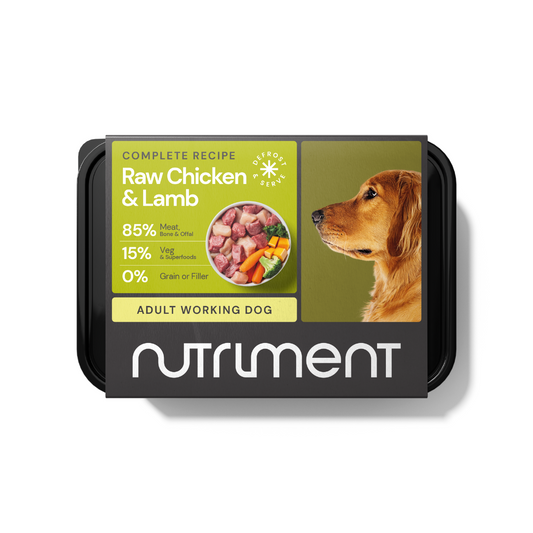
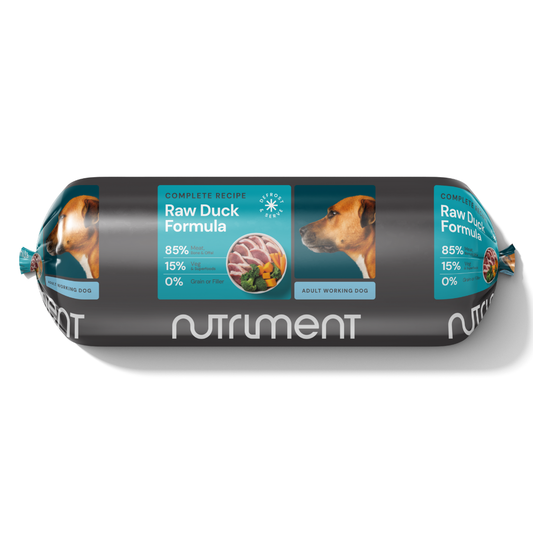
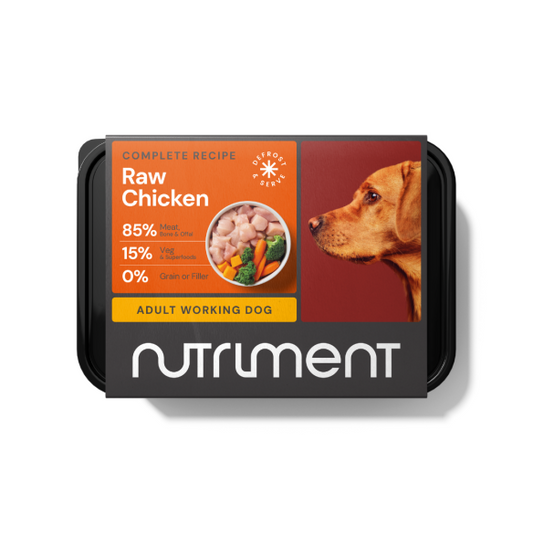
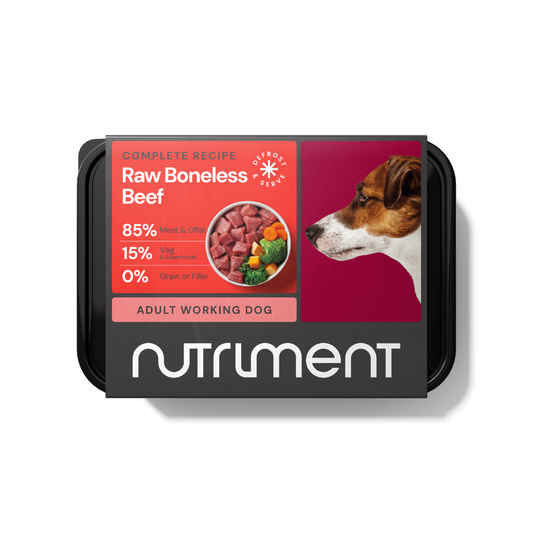
Our complete raw meals are made with human-grade ingredients, no artificial additives, and no fillers — everything your dog's gut is built to handle. 

For dogs with specific digestive needs, our Support Range includes recipes formulated for particular requirements: 

  • DDD - defrost, a golden retriever dog helps their owner take food out of the freezer.

    Defrost.

    When you're ready to defrost a meal, take it out of the freezer and leave to defrost in the fridge.

  • DDD - dish, a golden retriever watches their owner put raw dog food into a bowl on a kitchen counter.

    Dish.

    Once defrosted, just serve into their bowl with clean utensils.

  • DDD Delight - a golden retriever eating raw food on the floor of a kitchen with their owner petting them.

    Delight!

    Enjoy watching your pet devour every bite.

FAQs: Raw food and your dog's gut health

Does raw food improve a dog's gut health? 

The evidence consistentlysuggestsit does. Multiple independent studies have found that raw feeding increases gut microbiome diversity, improves short-chain fatty acid production, and supports better nutrient absorption compared to processed diets. Our 101-dog study found significant microbiome improvement in just 35days.

How quickly does the microbiome change on raw food?

Quickly. Our study showed significant changes within 35 days. Other research has found that dietary shifts begin to alter gut microbial populations within weeks of changing what's in the bowl.

Does it matter what age a dog starts eating raw? 

Early is better — Dog Risk research found that early-life diet has lasting consequences for gut health in adulthood. But Nutriment's own study showed significant microbiome improvements in senior dogs too, who are typically the hardest to support.

Is kibble bad for a dog's gut? 

Heavily processed kibble — high in carbohydrates, lower in bioavailable protein, produced through high-temperature extrusion — creates conditions that don't suit a carnivore's gut. Research consistently shows lower nutrient digestibility and less favourable microbiome composition in kibble-fed dogs compared to those on raw diets. You can read more here.

What are short-chain fatty acids and why do they matter?

Short-chain fatty acids are produced by gut bacteria when they break down food. Dogs can't make them independently, and they're difficult to supplement effectively. They maintain the gut lining, support brain function, and play a role in serotonin production — meaning a gut that produces more of them is a fundamentally healthier gut.

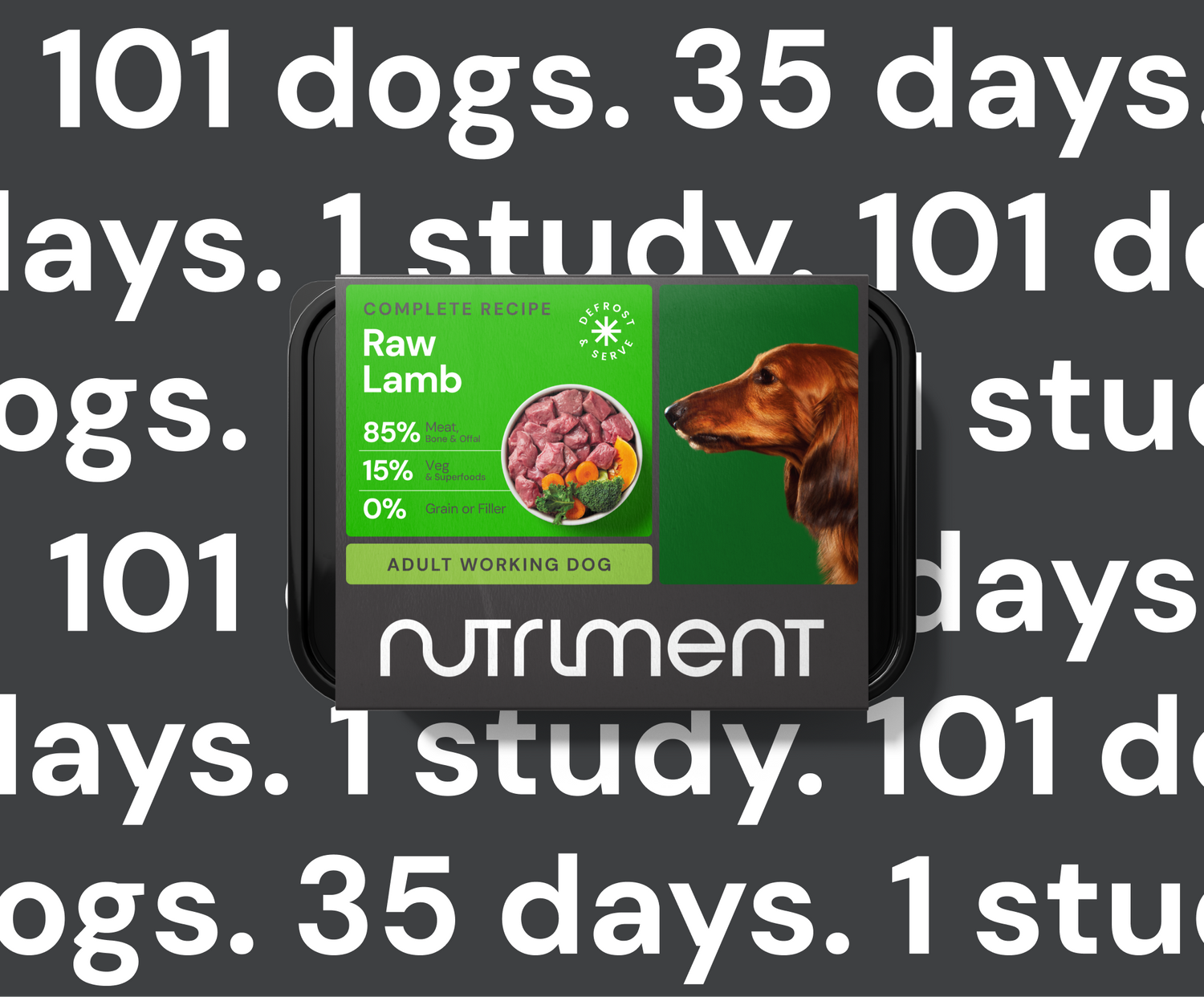
Dog food package with "Raw Lamb" and a dog image; background with "101 dogs. 35 days. 1 study." in bold text.

Want to go deeper into the science?

Explore the full Trust Your Gut study at trustyourgut.pet — or discover our complete raw range and take the first step towards a healthier gut for your dog.🐾